SEO to GEO: How Generative Engine Optimization Is Replacing Traditional Search
AI assistants now summarize answers directly. Here is what GEO is, how AI engines choose their sources, and how to get your brand cited.

Search is no longer just a list of ten blue links. A buyer can now ask ChatGPT, Google AI Overviews, Claude or Perplexity a question and receive one finished answer that cites only a handful of brands. If your business is missing from that answer, you are invisible at the exact moment a customer is deciding.
That is why marketers are moving from SEO to GEO. Traditional SEO is not dead, but on its own it is no longer enough. In this guide you will learn what Generative Engine Optimization is, how AI search engines pull their sources, and 16 practical steps to earn citations from AI models.
Key takeaways
- SEO to GEO is a change of goal: from ranking a page to being cited inside an AI-written answer.
- Generative Engine Optimization rewards content that is clear, structured, trustworthy and easy to quote.
- ChatGPT and other assistants draw on the live web, search indexes and well-known brands.
- You do not abandon SEO. Strong SEO is the foundation that GEO builds on.
What Is SEO to GEO? A Simple Definition
SEO to GEO describes the move from search engine optimization to Generative Engine Optimization. SEO helps a web page rank high in a list of results. GEO helps your brand, product or expertise get mentioned, cited and recommended inside the answer an AI model writes.
Generative Engine Optimization is a newer discipline, but its logic is familiar. Instead of persuading an algorithm to rank you, you make it easy for a language model to understand you, trust you and quote you.
Think of it like this. A traditional search engine hands the user a library catalogue. A generative engine hands the user a finished summary. In a catalogue, being first on the shelf matters. In a summary, being one of the three sources the assistant names is what matters.
Why SEO to GEO Is Trending Right Now
Three forces are pushing SEO to GEO onto every marketing agenda:
- Assistants answer directly. ChatGPT, Google AI Overviews and Claude summarize information, so users often never click through to a website.
- Discovery is conversational. People ask long, natural questions instead of typing two or three keywords.
- Citations are scarce. An AI answer usually names only a few sources, so each mention carries more weight than a normal search listing.
Marketers who learn Generative Engine Optimization early are building an advantage that will be hard for late movers to copy.
How AI Search Engines Pull Their Sources
To win at SEO to GEO, you first need to understand how a generative engine builds an answer. The details differ by product, but the broad pattern is the same.

Step 1: The AI understands the question
The model breaks a prompt into intent, entities and sub-questions. A query such as “best digital marketing course in Raipur” can trigger several hidden searches covering fees, syllabus, reviews and placements. Many AI search tools run these related searches behind the scenes.
Step 2: It retrieves candidate sources
Depending on the product and its settings, an assistant such as ChatGPT can search the live web, while others lean on training data plus a search index. Pages that are crawlable, fast and clearly focused on one topic are easier to retrieve. Blocking AI crawlers in robots.txt can remove you from the pool entirely.
Step 3: It judges trust and relevance
Models prefer sources that look reliable: named authors, original data, facts that stay consistent across the web, reviews, and mentions on respected sites. Brand mentions on third-party websites act like votes of confidence.
Step 4: It writes the answer and cites
The model synthesizes a response and attaches links or names for the sources it relied on. Content written in short, self-contained passages is far easier to lift into an answer than long, winding paragraphs.
SEO to GEO: Key Differences at a Glance
The table below shows where the two disciplines diverge and where they overlap.
| Factor | Traditional SEO | GEO |
|---|---|---|
| Main goal | Rank a page on the results list | Be cited inside the AI answer |
| Success metric | Positions, clicks, organic traffic | Citations, brand mentions, recommendation share |
| Content style | Keyword-focused pages | Direct answers, entities and verifiable facts |
| Trust signals | Backlinks and page authority | Backlinks plus brand mentions, reviews and author expertise |
| Format | Long, comprehensive pages | Structured, quotable passages with schema |
| Tracking | Rank trackers and analytics | Prompt testing, mention tracking and AI referral traffic |
Notice that the two columns overlap far more than they differ. That is why the best way to read SEO to GEO is as an upgrade of your search strategy, not a replacement of it. The results page is simply losing attention to AI answers, and your content has to work in both places.
16 Actionable Steps for SEO to GEO Success
Use this checklist to make your content easier for AI models to find, trust and quote. Start with the first row and work down.
- 01
Answer first
Open every section with a direct 40 to 60 word answer, then add detail.
- 02
Use question headings
Phrase headings as the real questions people type into ChatGPT.
- 03
Add FAQ schema
Mark up questions and answers so machines can read them without guessing.
- 04
Show real authorship
Add author bios, credentials and a clear last-updated date to every post.
- 05
Publish original data
Surveys, case studies and benchmarks give AI models something unique to cite.
- 06
Build entity clarity
Describe your brand, services and location the same way on every page and profile.
- 07
Earn brand mentions
Get featured on respected sites, directories, podcasts and industry publications.
- 08
Allow AI crawlers
Check robots.txt and your firewall so the crawlers you want can read your pages.
- 09
Write quotable passages
Keep key claims in short, self-contained sentences that survive being copied out of context.
- 10
Use lists and tables
Structured formats are easier for models to extract and summarize accurately.
- 11
Keep facts fresh
Update prices, dates and statistics regularly, because stale facts reduce trust.
- 12
Strengthen E-E-A-T
Prove experience, expertise, authority and trust with evidence, not slogans.
- 13
Fix technical SEO
Fast pages, clean HTML, sitemaps and internal links still decide what gets retrieved.
- 14
Collect reviews
Reviews on Google and social platforms feed the reputation signals models read.
- 15
Cover the whole topic
Build topic clusters that answer follow-up questions, not just one keyword.
- 16
Test in the assistants
Ask ChatGPT, Gemini, Claude and Perplexity your target questions monthly and log the results.
How ChatGPT, Google AI Overviews and Claude Choose What to Cite
Every platform behaves a little differently, but the same patterns keep appearing. Tune your content for each one without losing sight of the shared fundamentals.
ChatGPT and SEO to GEO: Optimize for Conversational Answers
ChatGPT responds in a conversational tone and can cite pages when it browses the web. Write the way people speak, define terms in plain language, and publish pages that fully answer one question. Mentions of your brand in forums, reviews and news coverage help ChatGPT recognize you as a real, established entity.
Google AI Overviews: Stay Strong in Classic SEO
Google AI Overviews generally draw on pages that already perform well in Google Search, so ranking still matters. Strong technical SEO, genuinely helpful content and structured data raise your chances of being linked inside an overview.
Claude and Other Assistants: Be Clear, Accurate and Original
AI assistants such as Claude, Gemini and Perplexity generally favour content that is accurate, well organised and clearly attributed. Original insight beats rewritten summaries, because a model gains nothing by quoting what a hundred other pages already say.
Measuring SEO to GEO Performance
You cannot improve what you do not measure. Track these five signals every month:
- Citation share: how often your brand is named across a fixed set of 20 to 30 target prompts.
- Brand mentions: whether AI tools describe your business accurately and positively.
- AI referral traffic: visits from sources such as chatgpt.com and perplexity.ai in your analytics.
- Branded search growth: more people searching your name after meeting you in an AI answer.
- Lead quality: visitors who arrive from AI tools are often better informed and closer to a decision.
Run the same prompt set each month and record the results in a simple spreadsheet. AI answers vary from session to session, so judge trends over time rather than any single response.
Common Mistakes to Avoid in SEO to GEO
- Stuffing keywords. Models read meaning, not keyword density, so unnatural repetition only hurts clarity.
- Publishing unreviewed AI text. Generic, machine-written pages add nothing new for a model to cite.
- Blocking crawlers by accident. A single misconfigured rule can hide your whole site from AI tools.
- Ignoring off-site reputation. Reviews, directories and press mentions shape what AI says about you.
- Treating GEO as a one-time project. AI products change quickly, so your tactics must keep evolving.
- Believing guarantees. No one can promise a citation, so be wary of anyone who does.
Your 90-Day SEO to GEO Roadmap
Days 1 to 30: Audit and fix the foundation
Check crawlability, page speed, schema and robots.txt. List the 25 questions your customers ask most and see how ChatGPT and other assistants answer them today. This baseline shows you where you stand.
Days 31 to 60: Create citation-ready content
Rewrite your top pages with direct answers, question headings, tables and FAQ sections. Add author bios and publish at least one piece of original research or a real case study.
Days 61 to 90: Earn mentions and measure
Pitch guest articles, collect fresh reviews and strengthen your profiles on trusted directories. Re-run your prompt tests, compare them with your baseline, and double down on what moved the needle.
Conclusion: Make SEO to GEO Part of Your Strategy
The shift from SEO to GEO is not about chasing a new trick. It is about becoming the clearest, most trustworthy answer to the questions your customers already ask. Generative Engine Optimization rewards the same qualities that great marketing has always valued: expertise, honesty and usefulness.
Start your SEO to GEO journey now. Pick your five most important pages, add a direct answer to the top of each, mark up an FAQ, and test the results in ChatGPT next week. Small, consistent steps compound quickly.
Frequently Asked Questions
What is SEO to GEO?
SEO to GEO is the shift from optimizing pages for search rankings to optimizing content so that AI tools such as ChatGPT, Google AI Overviews and Claude cite and recommend your brand in their answers. It builds on SEO rather than discarding it.
What is Generative Engine Optimization?
Generative Engine Optimization (GEO) is the practice of structuring and promoting your content so that generative AI engines can find it, trust it and include it in the answers they write.
Is traditional SEO dead?
No. AI engines still rely on crawlable, well-structured, high-quality pages. Technical SEO, helpful content and authority remain the foundation. What changes is the goal: visibility inside AI answers, not only positions on a results page.
How can I get my brand cited by ChatGPT?
There is no guaranteed method, but you can improve your odds. Publish accurate, original and well-structured content, keep your brand details consistent across the web, earn mentions on reputable sites, and make sure AI crawlers can access your pages. Then test your target prompts regularly.
How long does it take to see GEO results?
Most teams notice changes within a few weeks to a few months, depending on competition and how often AI tools refresh their sources. Treat it as an ongoing practice, not a one-off project.
Can I learn SEO to GEO at TDMA?
Yes. TDMA's AI-based digital marketing courses in Raipur cover SEO, performance marketing and 50+ AI tools, with live projects and placement support. Call 8349 333 666 to book a free demo.
About TDMA: Where You Can Learn SEO to GEO
TDMA (Trinity Digital Marketing Academy) is a leading digital marketing training institute in Raipur and a brand of Technobrains Education Pvt. Ltd. Established in 2014, it has trained more than 30,000 students and has a presence across 10 states and 50+ cities. Its AI-based programs are built to make learners job-ready, whether they choose a job, freelancing or their own agency.
- 2014Established
- 30,000+Students trained
- 50+Cities, 10 states
- 65+Modules in the curriculum
- 50+AI tools covered
- 95%Placement success
- 30Live projects
- 200+Employers in the hiring network
Courses at TDMA
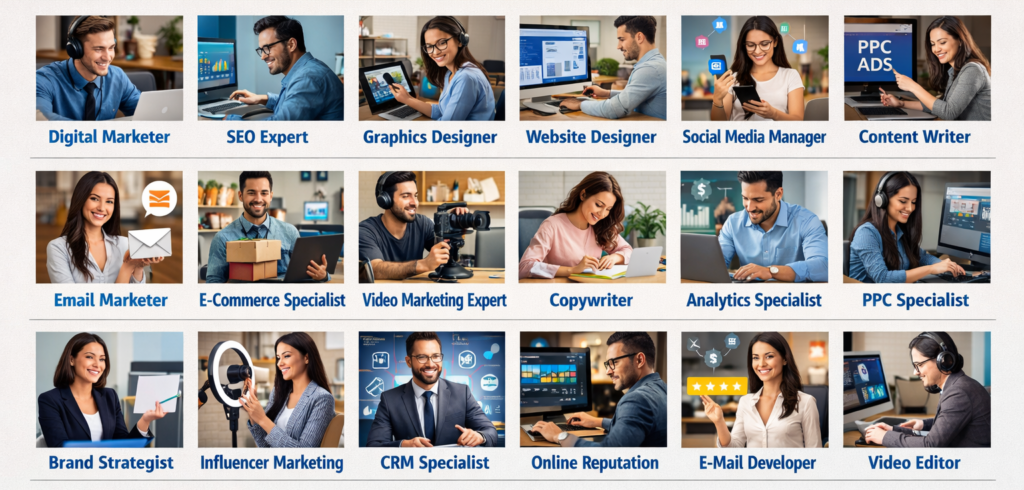
- Digital Expert with AI: SEO and content strategy, Google Ads and analytics, AI tools and automation.
- Digital Pro with AI: paid ads and funnels, AI creatives and automation, campaign optimisation.
- Short-term courses: four-week programs in Business Growth with AI, Performance Marketing, Graphic Designing and YouTube Marketing.
Why students choose TDMA
- No eligibility barrier: anyone ready to explore and learn can join.
- NSDC certified trainers, internship support and Google and Meta certificates.
- Three books of study material and free tools worth ₹15,000 to start the course.
- Placement assistance, interview coaching and 30+ job alerts every week.
- A free 3-day demo, and a new batch starting every Wednesday.
Talk to a TDMA career counsellor
Call: 8349 333 666
Email: info@tdma.in
Website: tdma.in
Head office: 309, Shyam Square, Near LIC Building, Pandri, Raipur, Chhattisgarh